Radon Progeny: The Hidden Risk Beyond Radon Gas
Most people know that radon is a radioactive gas that seeps into homes from the soil. What's less well known is that radon itself is not the biggest danger. The true culprits are its decay products, also called radon progeny.
Understanding progeny is essential if you want a complete picture of the health risks in your home or workplace.
What Are Radon Progeny?
When radon gas (Rn-222) breaks down, it produces a series of short-lived radioactive particles: polonium-218, lead-214, bismuth-214, and polonium-214.
Key Facts About Progeny
- • These progeny are solids, not gases
- • They attach themselves to dust, smoke, and moisture in the air
- • When inhaled, they stick to the lungs and release alpha radiation directly into lung tissue
This is why radon exposure is the second leading cause of lung cancer in the U.S.—the damage comes primarily from progeny, not the radon gas you breathe in and out.
When Should You Test for Radon Progeny?
Measuring radon gas is always the first step, but there are situations where testing for progeny adds important insight:
You live or work in poorly ventilated or dust-heavy environments
Progeny ride on airborne particles, so stagnant or dusty indoor air can increase exposure.
You've already mitigated for radon, but want to confirm progeny levels are reduced too
A system may lower radon gas, but it doesn't always guarantee that decay products are equally reduced.
Someone in your household or workspace has serious respiratory issues
People with compromised lung health are more sensitive to radiation damage caused by inhaled particles.
Standard mitigation hasn't solved the problem
If radon gas remains high after professional mitigation, it's time to evaluate the equilibrium ratio— the balance between radon and progeny— and consider more advanced testing. Qualified mitigation professionals may need to implement different techniques.
How Does Smart Home Radon Test for Decay Products?
At Smart Home Radon, we don't just stop at gas measurements. To provide a full picture of indoor air quality, we also test for radon progeny.
RPISU Testing Technology
We use Radon Progeny Integrating Sampling Units (RPISUs), a proven technology for measuring decay product concentrations over time.
This method is performed under ANSI/AARST national standards, ensuring results that are accurate, consistent, and reliable.
By combining radon gas testing with progeny analysis, we help you understand both sides of the risk—so you can take the right steps for long-term protection.
🔬 Explore Each Radioactive Particle
Dive deeper into the science behind each decay product. Learn about their unique characteristics, health risks, and why each one matters.
What Should Clients Take Away?
- ✓Radon progeny are the true health threat—they deliver radiation directly to lung tissue.
- ✓Gas results don't always tell the whole story—progeny levels can still be high even if radon gas seems moderate.
- ✓Advanced testing matters—RPISU testing confirms whether mitigation has reduced all risks.
- ✓Solutions exist—from improving ventilation to advanced mitigation, the right steps can lower both gas and progeny exposure.
How to Solve Progeny Problems
Mitigate radon gas first (usually with active soil depressurization).
Improve ventilation and reduce dust to limit particle build-up.
Re-test with progeny measurements to confirm safety.
Stay consistent with follow-up testing every 2 years, or sooner if conditions change.
📞 Ready for Advanced Radon Testing?
Interested in RPISU progeny testing? Have questions about our advanced testing methods? We're here to help you get the complete picture of your indoor air quality.
About the Author – Daisy Rezende
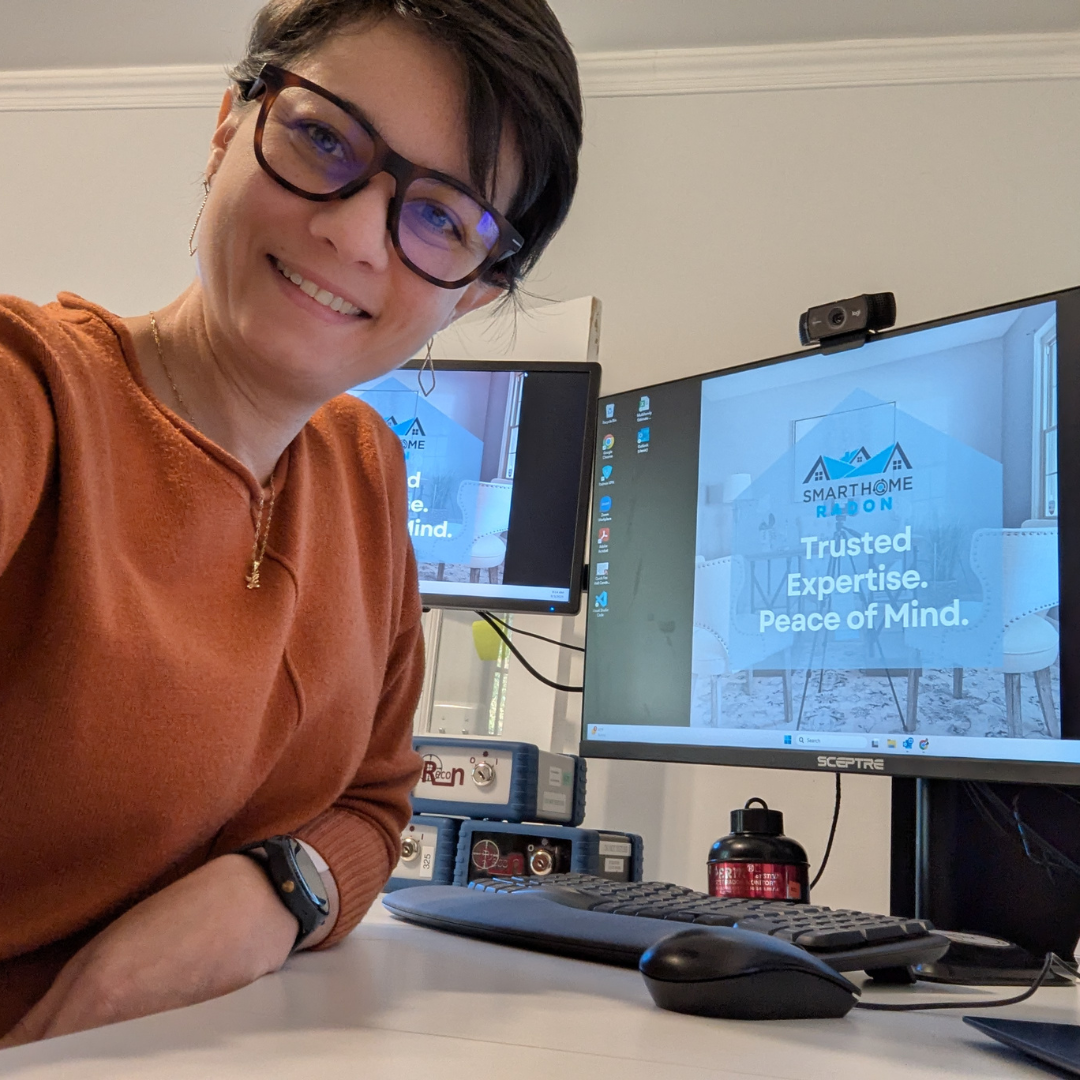
Daisy Rezende is a nationally certified radon measurement provider, lead paint inspector, and mold investigator. As co-owner of Smart Home Radon and Smart Home Inspects, she brings certified expertise and a passion for healthy housing to every inspection. Daisy actively contributes to national industry standards through her work with the Indoor Environments Association (IEA) and as a voting member of the Radon Mitigation Standards Consortium. Her mission: to improve air quality, educate the public, and support healthier homes across Maryland and beyond.
Read Full Bio